Monday, July 16, 2007

The first edition of the Bookworms Carnival

If you are here reading my blog, and others like it, I guarantee you will LOVE the Bookworms Carnival. The first edition is hosted by Dewey at the hidden side of a leaf. Filled with lots of wonderful reviews and book talk, it is not to be missed. With the opportunity to contribute to upcoming editions, what are you waiting for?

If you haven't read it, be sure to keep an eye out for my entry, a review of Purple Hibiscus by Chimamanda Ngozi Adichie.

Happy Reading!

Sense of Place Contest

Maggie over at Maggie Reads has added an additional contest to the Southern Reading Challenge. She asks readers to pick a passage from one of our challenge books that depicts a sense of place, and post a picture along with that passage.

I decided to select a passage from The Optimist's Daughter (linked to my review). Although a large part of the book takes place in the main characters' hometown, Mount Salus, Mississippi, I chose a different location that Eudora Welty captured perfectly. The following passage depicts the train journey that Laurel and her step-mother took after the death of Judge McKelva, returning from New Orleans to Mount Salus.

"Set deep in the swamp, where the black trees were welling with buds like red drops, was one low beech that had kept its last year's leaves, and it appeared to Laurel to travel along with their train, gliding at a magic speed through the cypresses they left behind. It was her own reflection in the windowpane--the beech tree was her head. Now it was gone. As the train left the black swamp and pulled out into the space of Pontchartrain, the window filled with a featureless sky over pale smooth water, where a seagull was hanging with wings fixed, like a stopped clock on the wall." (p. 45)
Causeway over Lake Pontchartrain

Sunday, July 15, 2007

The Optimist's Daughter - Eudora Welty


Title: The Optimist's Daughter
Author: Eudora Welty
Country: America (south)
Year: 1972
Rating: B+
Pages: 180 pgs

"Never think you've seen the last of anything" - Eudora Welty (she died on July 23, 2001)

First sentence (and second sentence, because I really like it): A nurse held the door open for them. Judge McKelva going first, then his daughter Laurel, then his wife Fay, they walked into the windowless room where the doctor would make his examination.

The Optimist's Daughter is a character-driven rather than a plot-driven story. Therefore, a quick summary of the plot does not do it justice. The majority of what makes the novella a good read is hidden below the surface, as Welty explores issues including love, loss, memory and the passage of time. Although short, it is not an easy read, and is best read at leisure, absorbing the words rather than scanning them.

One of the overarching themes of the novel is individual human memory; a reminder that memory is a living thing, and is itself subject to transit. The confluence of human memory is alluded to in the following passage, a memory that Laurel recalls of returning to Mount Salus with her husband:

"When they were climbing the long approach to a bridge after leaving Cairo, rising slowly higher until they rode above the tops of bare trees, she looked down and saw the pale light widening and the river bottoms opening out, and then the water appearing, reflecting the low, early, sun. There were two rivers. Here was where they came together. This was the confluence of the waters, the Ohio and the Mississippi...And they themselves were a part of the confluence. Their own joint act of faith had brought them here at the very moment and matched its occurrence, and proceeded as it proceeded. Direction itself was made beautiful, momentous." (p.159)
My only complaint with the novella was that I could never get a full sense of the characters. When I reached the last page, I wished that I knew and understood them better, particularly Laurel. The end was unsatisfying, and I longed to know more. Of course, this could have been Eudora Welty's intent.

A metaphor on the persistence of memories:
"It [the bird] could not get in here. But had it been in already? For how long had it made free of the house, shuttling through the dark rooms? And now Laurel could not get it out." (p.129)
Creating the perfect southern scene:
"Laurel, kneeling, worked among the iris that still held a ragged line along the back of the house up to the kitchen door...Her callers sat behind her and over to the side, in the open sunshine. These four elderly ladies were all at home in the McKelva backyard. Cardinals, flying down from low branches of the dogwood tree, were feeding here and there at the ladies' crossed feet. At the top of the tree, a mockingbird stood silent over them like a sentinel." (p.105)


Saturday, July 14, 2007

The Great Harry Potter Re-Read, Book 4


1. Word Count: 190,637 words

2. Wand Order Problem: When Harry confronts Voldemort in the graveyard, and the Reverse Spell goes into effect, James Potter's image comes out before that of Harry's mother, Lily. This would mean that James died after Lily, even though previous books had James dying first. This passage was later changed in later editions to the correct order.

3. Mysteries remaining to be solved:
- Where did Snape go at the end of the novel?
- Why did Dumbledore have a "gleam of triumph" in his eyes when he found out that Voldemort had used Harry's blood to recreate himself?

Swedish Cover Art
Up next is a break from the Harry Potter series, as I've delved into Eudora Welty's Pulitzer Prize winning novel, The Optimist's Daughter.

Tuesday, July 10, 2007

The Great Harry Potter Re-Read, Book 3


Harry Potter and the Prisoner of Azkaban
1. Word Count: 107,253 words

2. Mythology (**Possible Spoiler***): Both Sirius Black and Remus Lupin's names are rooted in mythology. Sirius is a bright star situated in the constellation Canis Major, also known as the Big Dog. The Sirius Star is frequently referred to as the Dog Star. In Latin, 'Lupo' means wolf, and Remus is one of the twin brothers raised by a female wolf (lupa) in Roman mythology.

It was difficult to find very much trivia about this book in the series, so that's all I have come up with for now. But enjoy the cover art!

Peruvian Book Cover

German Cover Art

Give A Friend A Book Winner


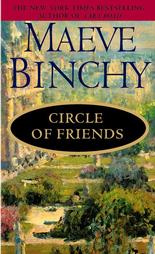
After a random drawing, a winner has been chosen to receive Circle of Friends, the book that I am giving away for Give a Friend A Book Week!

**Congratulations to Teabird, over at Tea Reads, for winning the drawing!**

I hope you enjoy the book!

And, on a fun note, I was also the recipient of a drawing this week, winning two bookmarks for the Chunkster Challenge. Thank you, Bookfool!!

Sunday, July 8, 2007

Buy/Give a Friend A Book Week

*** STICKY POST***


Tanabata over at In Spring It Is the Dawn clued me in to Buy A Friend A Book Week. I now have quite a few book duplicates floating around my house, some of which have already been claimed by friends (see my previous post for why I have duplicates lying around my house). But I wanted to offer up a book for my blogging buddies, so I will be giving (sorry, it's not a new copy) away Circle of Friends by Maeve Binchy. If you would like to give this book a new home, a book that happens to be one of my favorites, just leave a message. I will be drawing a name this coming Sunday, June 8th.

Friday, July 6, 2007

Booking Through Thursday (On Friday)


What, in your opinion, is the (mythical) Great American Novel? At least to date. A “classic,” or a current one–either would be fine. Mark Twain? J.D. Salinger? F. Scott Fitzgerald? Stephen King? Laura Ingalls Wilder?

It doesn’t have to be your favorite book, mind you. “Citizen Kane” may be the “best” film, and I concede its merits, but it’s not my favorite. You don’t have to love something to know that it’s good.

Now, I know that not all of you are American–but you can play, too! What I want from you is to know what you consider to the best novel of YOUR country. It might be someone the rest of us haven’t heard of and, frankly, I think we’d all like to get some new authors to read.

In fact, while we’re at it–I’m curious about the geographical make-up of this meme. So, while you’re leaving your link to your post, tell us where in the world you are! (For the record, I’m in New Jersey, USA.)

I think the following nicely sums up why I think The Grapes of Wrath is a Great American Novel:
'It was publicly banned and burned by citizens, it was debated on national radio hook-ups; but above all, it was read' - Peter Lisca, The Wide World of John Steinbeck
It is a book that continues to be read, almost 70 years later. Yes, it is a political novel. But the Joad family's ambitions represent the American ideal of hard work and determination; that you can start from scratch, work your way up from nothing, and become a success. These are traits that are still valued by many today.

There is another book I classify as the Great American Novel, say the GAN of the 1800's, and that is Uncle Tom's Cabin by Harriet Beecher Stowe. I can't think of another book that has such a profound effect on American consciousness and history. Abraham Lincoln's greeting when he first met Stowe hints at the impact she had on her time: "So this is the little lady who made this big war".

Thursday, July 5, 2007

A Treasure Unearthed

Martin Memorial Library,
circa before I was born
One of my fondest memories as a child is going to the Martin Memorial Library each week in the summer, to browse through the vast collection of books, finding new treasures all the time. It wasn't until high school that I began to accumulate a library of my own. For the past few years, I thought that many of my books from my young adulthood had been lost on one of my many migrations north, south, east, and west (yes, I have traveled in all directions, and have yet to put down roots!). I had searched my parents home high and low trying to find all of them, to no avail.

And then, a few weeks ago I received a phone call. While cleaning out their garage--which happened to be filled to the brim with furniture from my grandfather's home--they discovered my boxes of missing books! It was with much delight that we picked up these little treasures yesterday. Ever since, I have been in book heaven. I had replaced some of my favorites, but there is nothing like reclaiming your original copy.Like pictures, so many books hold precious memories to me. They like to remind me how they have shaped my life, and helped make me who I am. There are the books I discovered in high school, when I was just starting to create my own uniqueness, figuring out my personality as separate from my friends. In choosing two selections I would memorize and recite in 10th grade Honor's English, (the only time in my life I ever had to memorize a part of a book) why did I choose the first paragraph of A Tale of Two Cities, and the following selection from Shakespeare's Merchant of Venice?
"I am a Jew. Hath not a Jew eyes? Hath not a Jew hands, organs, dimensions, senses, affections, passions? fed with the same food, hurt with the same weapons, subject to the same diseases, healed by the same means, warmed and cooled by the same winter and summer as a Christian is? If you prick us, do we not bleed? If you tickle us, do we not laugh? If you poison us, do we not die? And if you wrong us, shall we not revenge?" (p.45, Merchant of Venice)
At 16, I was already exploring the depth of the human condition and religious tolerance (even if I may not have realized it). Like the prodigal son, I welcome with opens arms the return of my collection of Shakespeare plays I purchased over the years from the Folger Shakespeare Library. I delight in finding my beloved copy of Uncle Tom's Cabin, a book that helped me learn about slavery, more so than the lessons from my history teachers!
College introduced a whole other realm of exploration. I delighted in the dystopian and utopian literature we read in my Women's Lit class. The Handmaid's Tale was my introduction to Margaret Atwood, an acquaintance who is now firmly entrenched amongst my favorite authors. You can not imagine how happy I am to have my original copy back in my possession. I may have never discovered Octavia Butler's Parable of the Sower or Charlotte Perkins Gilman's Herland (isn't that book cover beautiful??) if it wasn't for that class. A few anthropology classes, which eventually turned into my second major, sparked my curiosity of other cultures, and a desire for a world that accepts and embraces diversity, with books such as Waterlily by Ella Cara Deloria and The Mountain People by Colin Turnbull standing out. No Shame in My Game by Harvard anthropologist Katherine Newman does a much better job of giving a voice to low-income workers than Barbara Ehrenreich has, as she interviewed and followed almost 300 low-income workers and job seekers in Harlem.

And of course there is the following tiny article, part of the Reader for the General Writing class, a required course for all Pitt freshman, that sparked my love for Frida Kahlo:
Finally, there are all of the books that I purchased to prepare myself for an adventure abroad on Semester at Sea, and the required reading for my onboard class, Post-Colonial Literature. If only Professor what's-his-face would have started with Chinua Achebe's Things Fall Apart instead of Conrad's Heart of Darkness, I might have enjoyed that class. We never got around to reading Tayeb Salih's Season of Migration to the North, and alas, seven years later it is still unread. However, the readings of Wild Swans by Jung Chang, A Pale View of Hills by Kazuo Ishiguro, and the Bhagavad Gita all remain vividly imprinted in my mind.

Monday, July 2, 2007

The Great Harry Potter Re-Read, Book 2


1. Word Count: 85,141 words.

2. Character based on a real person: The character of Gilderoy Lockhart is the one Rowling says is most nearly based on a real person, but she won't say who it is (for obvious reasons).

3. Writer's Block: Rowling's only case of writer's block occurred while writing this book, after her first bout of publicity for the first Harry Potter book.

4. Hogwarts Motto: Draco dormians nunquam titillandus!
Translation: A sleeping dragon must never be tickled!

5. Mandrakes: You know a mandrake has reached adulthood when they start trying to move into each other's pots. In the book, this is preceded by 'teenage' Mandrakes throwing a loud and raucous party in the greenhouse.

6. Movie tidbit: Fourteen Ford Anglia's were destroyed to create the Harry and Ron flying car/Whomping Willow sequence.

7. ***SPOILER***Salazar Slytherin: Dumbledore says that Voldemort was the last remaining ancestor of Salazar Slytherin, instead of descendant. J.K. Rowling said this was a "deliberate mistake". This mistake was fixed in further printings.

8. Ghosts: At his deathday party, Nearly Headless Nick "took several deep breaths". But later in the series, Moaning Myrtle says that ghosts don't breathe.

Denmark Cover Art